It was one of those evenings that began with good intentions — a quiet dinner among friends, laughter floating through the air, and glasses filled “just one more time.”
We all know the kind of drunks we are — or at least, we think we do. That evening simply confirmed it, each glass revealing a little more truth than intended.
The Happy Drunk
First, there was Maya, her laughter ringing above the music. Every sip made her brighter — a spark in human form. She hugged everyone twice, told the waiter he was an angel, and danced like her joy could save the world.
But beneath that radiant warmth lived a quiet truth: Maya didn’t laugh like that when she was sober. Her happiness was real — but borrowed. Each laugh was a little louder than the silence she carried home.
The Emotional Drunk
Then there was Eli, who began the evening telling stories and ended it telling confessions. He spoke of the mother he missed, the mistakes he never forgave himself for, the love he wished he hadn’t let go.
He cried — softly, sincerely — and everyone comforted him. Yet the next day, he’d pretend it never happened, locking his tenderness away again. Eli wasn’t weak when he drank. He was honest. And sobriety scared him because it made honesty harder to reach.
The Sloppy Drunk
Across the room, Tess was chaos in motion. She knocked over two glasses, lost her purse twice, and sang off-key to songs no one else knew. Her friends rolled their eyes but laughed anyway — she made a mess of everything and somehow made it lovable.
Yet later, when the laughter faded, Tess would wake to anxiety and shame, piecing together memories like broken glass. The world adored her when she stumbled, but no one stayed to help her stand.
The Angry Drunk
Then there was Daniel, whose voice grew sharper with each drink. He started with jokes, then opinions, then grievances. By midnight, every sentence had an edge. He wasn’t cruel, not exactly — but his anger had been waiting its turn.
It wasn’t the alcohol that made him mean. It was the years of holding his tongue. The drink simply gave his resentment a stage.
The Sleepy Drunk
And finally, Rose, who said little but smiled at everyone. By the third glass, her head rested against her hand. By the fourth, her eyes grew heavy.
She wasn’t bored — she was tired. The drink didn’t dull her; it released her from the performance of being awake for everyone else.
Someone draped a coat over her shoulders as she drifted off, and for a moment, she looked peaceful — as if she’d finally allowed herself to rest.
When the night ended, the group scattered — some laughing, some apologizing, some quietly vanishing into the cool dark.
The table was littered with glasses — empty, but glistening in the candlelight like a lineup of little truths.
No one remembered everything the next day. But something lingered. They had all seen each other differently. The drink had shown what sobriety often hides: that everyone carries a version of themselves they’re trying to understand.
Alcohol doesn’t change who we are — it reveals what we bury. Some bury joy, some grief, some anger, some exhaustion. We don’t drink to become different people; we drink to meet the ones we hide. And perhaps real connection begins when we learn to see them — and love them — without the glass between us.
Stay Connected! Join Our Many Subscribers!
Processing…
Success! You're on the list.
Whoops! There was an error and we couldn't process your subscription. Please reload the page and try again.
Alcohol is often romanticized as a social lubricant, a coping tool, a celebratory ritual. From toasts at weddings to “wine o’clock” memes, it weaves through the cultural fabric as something lighthearted, even necessary. But beneath the social normalization lies a deeper, darker truth: alcohol doesn’t just affect your liver—it profoundly alters your mind, your mood, and your sense of self.
The Psychological Toll of Alcohol: Anxiety, Depression, and Emotional Numbness
Alcohol is often romanticized as a social lubricant, a coping tool, a celebratory ritual. From toasts at weddings to “wine o’clock” memes, it weaves through the cultural fabric as something lighthearted, even necessary. But beneath the social normalization lies a deeper, darker truth: alcohol doesn’t just affect your liver—it profoundly alters your mind, your mood, and your sense of self.
Alcohol is often seen as a social lubricant, a way to unwind, or a means of escape. But when consumption crosses the line into excess, the consequences can be devastating—physically, emotionally, and socially. From regretful decisions to life-altering tragedies, excessive drinking has led many down a path of destruction.
Existential Perspectives on Addiction: How Alcohol Numbs Deeper Fears About Meaning and Purpose
Existential philosophy explores human freedom, meaning, and the struggle with existence. Addiction, particularly alcohol dependence, is often linked to existential avoidance—the desire to escape discomfort, uncertainty, or the weight of existence itself.
1. Alcohol as an Escape from Existential Anxiety
Philosophers like Jean-Paul Sartre and Martin Heidegger discuss existential dread—the unsettling awareness of life’s uncertainty and impermanence. Many turn to alcohol as a way to numb this discomfort.
Sartre’s “Bad Faith” Concept: Sartre argues that people often deny their own freedom by engaging in self-deception. Alcohol can serve as a mechanism for avoiding responsibility and existential awareness.
Heidegger’s “Being-Toward-Death” Theory: Heidegger suggests that true authenticity comes from confronting mortality. Alcohol abuse delays this confrontation, creating a false sense of security.
Example: Someone struggling with a lack of purpose may drink excessively to avoid deep reflection, reinforcing a cycle of temporary relief and long-term emptiness.
2. Addiction and the Search for Meaning
Nietzsche’s Will to Power: Friedrich Nietzsche believed that humans seek purpose and self-overcoming. Addiction stagnates this process, trapping individuals in repetitive, destructive behaviors.
Viktor Frankl’s Logotherapy: Frankl argued that meaning is the key to psychological resilience. Many who struggle with addiction lack a sense of purpose, making alcohol a temporary substitute for fulfillment.
Example: A person who feels disconnected from their goals or identity may drink excessively, using alcohol as a false source of meaning rather than confronting their deeper existential struggles.
The Alcohol-Emotion Cycle: Temporary Relief, Lasting Damage
Alcohol is a central nervous system depressant. While it may initially create feelings of relaxation or euphoria by releasing dopamine and GABA (a calming neurotransmitter), this effect is temporary and deceptive.
As alcohol leaves the body, it disrupts your brain chemistry, lowering serotonin, increasing cortisol (the stress hormone), and destabilizing mood regulation. This leads to the infamous rebound effect—worsened anxiety, mood crashes, and irritability—often within hours or the next day.
In short:
Alcohol gives you emotional anesthesia first—and emotional inflammation later.
The Horrors of Drinking Too Much Alcohol
While alcohol may seem harmless in moderation, excessive consumption can lead to serious health risks, dangerous behaviors, and irreversible consequences.
1. Alcohol Poisoning: When One Night Turns Deadly
Alcohol poisoning occurs when the body cannot process the amount of alcohol consumed, leading to confusion, vomiting, seizures, slow breathing, and unconsciousness. In severe cases, it can be fatal.
2. The Silent Killer: How Chronic Alcohol Abuse Destroys the Body
Long-term alcohol abuse can cause:
Liver disease (cirrhosis, fatty liver, and hepatitis).
Many of these conditions develop gradually, making it easy to ignore the warning signs until it’s too late.
3. From Fun to Fatal: The Devastating Consequences of Drunk Driving
One of the most tragic mistakes made under the influence is getting behind the wheel. Drunk driving has led to countless accidents, injuries, and deaths, turning a night of drinking into a lifetime of regret.
Alcohol and Anxiety: Fueling the Fire
Many people drink to “take the edge off” anxiety. And it does work—briefly. But the long-term impact tells a different story:
Rebound Anxiety: After the initial calming effect, alcohol triggers the brain to compensate with increased arousal, making anxiety spike once it wears off.
Social Anxiety Loop: Alcohol might help you loosen up at social events, but over time it erodes confidence, making it harder to socialize without it.
Panic Sensitivity: Chronic drinking sensitizes the body to anxiety symptoms (like a racing heart or dizziness), increasing vulnerability to panic attacks.
Studies show that people with alcohol use disorders are twice as likely to experience anxiety disorders.
Alcohol and Depression: A Two-Way Street
It’s not just the hangover blues. Alcohol affects the same neurotransmitters—serotonin, dopamine, and norepinephrine—that regulate mood. Over time, drinking can:
Decrease motivation and pleasure (anhedonia)
Impair sleep, which exacerbates depression
Create feelings of guilt, shame, and isolation
Lead to a vicious cycle of drinking to escape, which deepens depression
In fact, alcohol is implicated in up to 40% of completed suicides—a sobering statistic that underscores its emotional weight.
Emotional Numbness: The Cost of Blunted Pain
Perhaps one of the most insidious effects of alcohol is emotional flattening. Regular drinking can dampen not only difficult emotions (fear, sadness, anger), but also joy, love, awe, and gratitude.
Alcohol numbs both ends of the emotional spectrum. The cost?
Disconnection from others
Loss of purpose or meaning
Reduced creativity and inspiration
A nagging sense of emptiness
This numbness is often mistaken for “calm,” but it’s actually emotional disassociation—a state where nothing feels too bad, but nothing feels too good either.
Shocking Statistics on Alcohol Consumption and Its Consequences
Alcohol-related emergencies and deaths continue to rise, with thousands of hospital visits annually due to alcohol poisoning and accidents
Worldwide, alcohol consumption caused approximately 2.6 million deaths in 2019, with 1.6 million from noncommunicable diseases, 700,000 from injuries, and 300,000 from communicable diseases.
Alcohol-related deaths disproportionately affect younger individuals, with 13% of alcohol-attributable deaths occurring in people aged 20–39 years.
An estimated 400 million people worldwide live with alcohol use disorders, and 209 million suffer from alcohol dependence.
Excessive alcohol consumption is linked to over 52 deaths per 100,000 people in the WHO European and African regions, making it one of the leading causes of preventable mortality.
Alcohol poisoning can be fatal, with symptoms including confusion, vomiting, seizures, slow breathing, and unconsciousness.
The Mistakes Made Under the Influence
Alcohol impairs judgment, decision-making, and impulse control, leading to reckless behavior and regretful choices.
1. Regret in the Morning: The Worst Decisions Made While Drunk
Texting an ex and reigniting toxic relationships.
Oversharing personal secrets that should have remained private.
Engaging in risky behavior that leads to embarrassment or harm.
2. How Alcohol Impairs Judgment: The Science Behind Bad Choices
Alcohol disrupts the brain’s prefrontal cortex, the area responsible for rational thinking and impulse control. This is why people make reckless financial, social, and personal decisions while intoxicated.
3. Alcohol and Relationships: How One Night Can Ruin Trust
Saying things you don’t mean in heated arguments.
Breaking promises due to impaired judgment.
Damaging friendships by acting irresponsibly.
The Long-Term Consequences of Excessive Drinking
Beyond the immediate regrets, excessive drinking can lead to lifelong struggles.
1. Alcohol and Brain Damage: How Heavy Drinking Alters Memory and Cognition
Chronic alcohol use shrinks brain tissue, leading to memory loss, difficulty concentrating, and cognitive decline.
2. The Hidden Health Risks: Liver Disease, Heart Problems, and Cancer
Alcohol is linked to various cancers, including liver, breast, and esophageal cancer.
3. Alcohol Withdrawal: The Nightmare of Addiction Recovery
For those dependent on alcohol, withdrawal symptoms can be severe, including tremors, hallucinations, seizures, and extreme anxiety.
4. Breaking the Cycle: How to Recognize and Overcome Alcohol Dependence
Replace drinking habits with healthier coping mechanisms.
Acknowledge the problem—denial only prolongs suffering.
Seek professional help—therapy and support groups can provide guidance.
The Neuroscience of Impaired Judgment: How Alcohol Disrupts the Brain’s Ability to Assess Risk
Alcohol directly affects the prefrontal cortex, the brain region responsible for decision-making, impulse control, and risk assessment. When alcohol enters the bloodstream, it slows neural communication, leading to poor judgment and reckless behavior.
1. How Alcohol Alters Brain Function
Reduces inhibition: Alcohol suppresses activity in the prefrontal cortex, making individuals more likely to engage in risky behaviors.
Impairs memory processing: The hippocampus, responsible for forming new memories, is disrupted, leading to blackouts and fragmented recall.
Weakens emotional regulation: The amygdala, which processes emotions, becomes overactive, causing mood swings and impulsivity.
Example: A person under the influence may ignore obvious dangers, such as driving while intoxicated or engaging in unsafe interactions, because their brain fails to assess consequences accurately.
The Social Pressure to Drink: Why People Ignore Warning Signs Due to Peer Influence
Alcohol consumption is deeply embedded in social culture, making it difficult for individuals to resist drinking—even when they recognize the risks.
1. The Psychology of Peer Influence
Fear of exclusion: Many drink to avoid feeling left out in social settings.
Normalization of excessive drinking: Environments where binge drinking is common make it seem acceptable, even when harmful.
Group reinforcement: When surrounded by others who drink heavily, individuals are less likely to recognize their own excessive consumption.
Example: Studies show that people drink more when surrounded by heavy drinkers, even if they initially intended to limit their intake.
The Cycle of Addiction: How Alcohol Rewires the Brain, Making Quitting Harder Over Time
Alcohol addiction is not just a habit—it is a neurological condition that alters brain chemistry, making it increasingly difficult to stop drinking.
1. The Three-Stage Cycle of Addiction
According to neuroscience research, addiction follows a three-stage cycle:
Binge/Intoxication: Alcohol activates the brain’s reward system, creating a pleasurable high.
Withdrawal/Negative Affect: When alcohol leaves the system, the brain experiences stress and discomfort, leading to cravings.
Preoccupation/Anticipation: The brain fixates on alcohol, making it difficult to focus on anything else.
2. How Alcohol Rewires the Brain
Reduces natural dopamine production: Over time, the brain relies on alcohol for pleasure, making everyday activities less enjoyable.
Strengthens cravings: The brain associates alcohol with relief, reinforcing compulsive drinking.
Weakens impulse control: The prefrontal cortex deteriorates, making it harder to resist urges.
Example: Even after months of sobriety, individuals with alcohol use disorder show impaired decision-making, proving that brain changes persist long after drinking stops.
The Ethics of Self-Destruction: Do We Have a Moral Responsibility to Protect Ourselves from Harm?
The question of self-destruction and moral responsibility is a complex ethical dilemma. While personal autonomy suggests that individuals have the right to make their own choices—including harmful ones—many philosophers argue that self-harm carries broader ethical implications.
1. Autonomy vs. Moral Obligation
Libertarian View: Some argue that individuals have absolute autonomy over their bodies and choices, even if those choices lead to harm.
Kantian Ethics: Immanuel Kant’s Categorical Imperative suggests that self-destruction violates moral duty, as it undermines human dignity and rational agency.
Example: If excessive drinking leads to self-harm, financial ruin, or broken relationships, does the individual bear moral responsibility for the ripple effects on others?
2. The Social Responsibility of Self-Destructive Behavior
Alcohol abuse doesn’t exist in isolation—it affects families, communities, and society.
Utilitarian Ethics: John Stuart Mill’s harm principle suggests that self-destructive behavior becomes ethically problematic when it negatively impacts others.
Example: A person who drinks excessively and drives intoxicated endangers lives, making their personal choices a moral issue beyond individual autonomy.
But What About Occasional Drinking?
The psychological toll of alcohol varies with frequency, quantity, and individual biology. However, even moderate or “normal” drinking can affect:
Sleep quality (fragmented REM sleep)
Next-day mood (irritability, brain fog)
Self-perception (increased self-criticism)
It’s not about demonizing alcohol—it’s about recognizing what it takes away in exchange for what it gives. And asking: Is it worth it?
Choosing Clarity: An Invitation to Reclaim Your Mind
You don’t need to hit rock bottom to reconsider your relationship with alcohol. You just need curiosity, self-compassion, and courage.
Here are some small, powerful shifts:
Practice “mindful drinking” (ask: Why am I drinking this?)
Try a “dry month” or sober weekend and journal how you feel
Replace alcohol with rituals that actually restore—like movement, tea, laughter, or silence
Join communities exploring sobriety or moderation (e.g., The Luckiest Club, Sober Curious)
And above all: notice what returns—clarity, emotion, connection, sleep, self-worth.
Alcohol Doesn’t Deserve the Credit
You are already brave. Already interesting. Already lovable. You don’t need a drink to soften the edges—you need space to feel, tools to cope, and people who meet you where you are.
Alcohol numbs pain—but it also numbs healing. When you give yourself the gift of full presence, the very emotions you once feared become the keys to your freedom.
Alcohol can be enjoyable in moderation, but excessive drinking leads to irreversible consequences. The next time you reach for another drink, ask yourself: Is this worth the risk? Because while alcohol fades, the mistakes it causes can last a lifetime.
Stay Connected! Join Our Many Subscribers!
Processing…
Success! You're on the list.
Whoops! There was an error and we couldn't process your subscription. Please reload the page and try again.
5 Drunk Personality Types: Understanding Your Alter Ego
Alcohol has a funny way of transforming our behavior. Some people become the life of the party, while others retreat into their own world. These changes can often be grouped into a few common “drunk personality” types. In this blog post, we’ll explore five distinct personalities that emerge after a few drinks. Whether you’re the social butterfly or the emotional friend, there’s always something fascinating to learn bout ourselves and others when the drinks start flowing.
Positive Attitude: Always cheerful and in a good mood.
Social Butterfly: Loves to chat and make new friends.
Energetic: Full of energy and excitement.
Description: The happy drunk is the person who seems to radiate joy after a few drinks. Their laughter is infectious, and they an uncanny ability to make everyone around them feel good. Whether its dancing, cracking jokes, or simply chatting up strangers, the Happy Drunk is always the center of attention. Their positive attitude can turn any gathering into a memorable event.
Sensitive: Easily moved to tears or deep conversations
Affectionate: Expresses love and appreciation for friends and family.
Description: The emotional Drunk wears their heart on their sleeve. After a few drinks, they may start reminiscing about the past, sharing heartfelt stories, or expressing gratitude for the people in their life. They might also become more empathetic, offering support and comfort to friends. While their emotions can be intense, they also bring a sense of authenticity and vulnerability to the group.
Clumsy: Prone to spills, trips, and minor accidents.
Forgetful: May lose track of belongings or conversations.
Uncoordinated: Struggles with maintaining balance and coherence.
Description: The Sloppy Drunk is known for their lack of coordination and general disarray after a few drinks. They might spill their drink, knock over furniture, or forget where they left their phone. While their antics can be amusing, its essential to keep an eye on them to ensure they stay safe. Despite the occasional mess, the Sloppy Drunk often provides comic relief and memorable stories.
4. The Angry Drunk
Photo by u0420u0435u043du0430u0442 u0413u0430u0433u0430u0440u0438u043d on Pexels.com
Characteristics:
Irritable: Quick to anger or frustration.
Argumentative: Engages in heated debates or conflicts.
Intense: Displays strong emotions and reactions.
Description: The Angry Drunk can be a bit of a wildcard. After a few drinks, their patience might wear thin, leading to arguments or confrontations. They may become more vocal about their grievances, whether its about personal matters or broader issues. Its important to approach the Angry Drunk with care and empathy, as their anger often stems from underlying emptions.
Tired: Feels drowsy or fatigued after a few drinks.
Quiet: Prefers to sit back and relax rather than engage actively.
Lethargic: Shows signs of low energy and motivation
Description: The Sleepy Drunk is the one who might end up snoozing on the coach before the part is over. Alcohol has a sedative effect on them, making them feel tired and less inclined to participate in the festivities. While they might not be the life of the party, their laid-back demeanor can bring a sense of calm to the group.
Stay Connected! Join Our Many Subscribers!
Processing…
Success! You're on the list.
Whoops! There was an error and we couldn't process your subscription. Please reload the page and try again.
Healing tool to assist in improving our daily life’s. EFT address’s distressed memories to restore the body’s flowing energy and replaces negative emotions.
“The cause of all negative emotions is a disruption in the body’s energy system.” by Gary Craig
Gary Craig is the founder of Emotional Freedom Technique also known as EFT, Tapping or EFT Tapping. This technique is a healing tool to assist in improving our daily life’s. This technique dissolves our emotional issues to improve physically, emotionally, mentally, environmentally, intellectually, occupationally, socially and spiritually. EFT is borrowed from the Chinese meridian system, Gary explains “EFT combines the physical benefits of acupuncture with the cognitive benefits of conventional therapy for a much faster, more complete treatment of emotional issues, and the physical and performance issues that often result.” EFT does not use needles, rather a simple two step method involving:
mentally “tuning in” to a specific issue(s) while
stimulating certain meridian points on the body by tapping on these points with your fingertips.
EFT appears to balance disturbances in the meridian system, if done correctly, thus reducing conventional therapy procedures from months or years down to minutes or hours. This technique is very easy to learn and can be done anywhere, anytime with impressive do-it-yourself results.
Energy courses through your body and it is invisible to the eye, this energy flows within your meridians. By simply tapping near the end points of these energy meridians, you can experience profound changes in your emotional and physical health.
Be careful of the many EFT programs out there that claim to be a legitimate alternative, do your homework before investing in any of these programs. Always consult a doctor before you practice EFT.
EFT respects the memory but focuses on addressing the true cause of your issues. Many people believe their memories are the root of their problems, but EFT doesn’t require you to relive past traumas to find relief. While painful memories may come up during the process, there is minimal suffering involved.
Negative emotions are often triggered by distressing memories that disrupt the body’s energy flow. EFT works by addressing the distressed memory, restoring the body’s energy, and replacing the negative emotion. This leads to rapid relief by directly addressing the root cause of the issue.
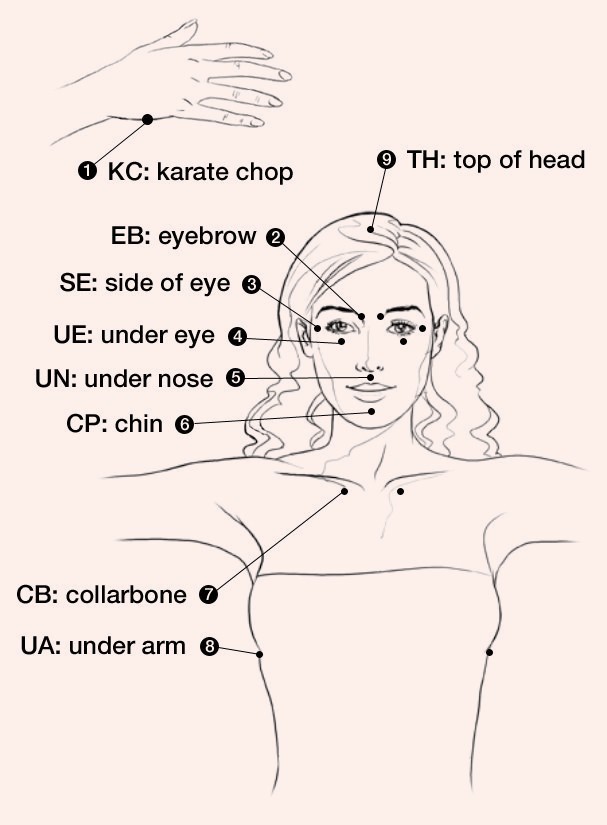
The EFT tapping process consists of five simple steps that should be followed in order. The technique focuses on a 9-point tapping sequence, which works with 12 meridians and 2 governing vessels. These pathways are interconnected, sending balancing energy through one pathway that influences others. This is why addressing just a few key pathways is enough to bring balance. Once you identify the issues, tapping stimulates the energy pathways, allowing the energy to flow freely. After you’ve memorized the process, it can be done in about 30 seconds.
Positive Outcomes Include:
Many soldiers report that their PTSD symptoms, nightmares, and intrusive thoughts have faded after using EFT.
Some phobias, such as fear of public speaking, spiders, or heights, have been completely eliminated in just a few minutes and never returned.
Various types of pain, including headaches, often experience partial or complete instant relief.
Professional therapists have found that EFT allows them to achieve deeper, faster, and longer-lasting results with clients.
Cravings, including for sugar, alcohol, cigarettes, and shopping, can subside. When you feel a craving, performing EFT can help. Remember, cravings are a lighter form of addiction, and deeper issues may need to be addressed if you’re dealing with substance dependencies.
Some athletes report improved, sometimes dramatic, performance.
Many people with serious illnesses experience partial to complete symptom relief. EFT has helped with a wide range of issues where emotional or energetic factors are involved. While success varies and not everyone finds relief, the theory is that unresolved stress or emotional issues over time may make our bodies more vulnerable to disease, so it’s always recommended to clear as much of that stress as possible.
To address emotional issues like anger, relationship problems, workplace stress, low self-esteem, and anxiety, focus on the emotions tied to the issue. Identify what makes the situation intense and use tapping to release those emotions.
The EFT Tapping Points
KC: (Karate Chop). This is located at the center of the fleshy part of the outside of your hand (either hand) that you would use to deliver a karate chop.
TOH: (Top of the head). This point is halfway between your ears and the center of your nose to the middle of the back of your head.
EB: (Eyebrow). At the beginning of the eyebrow.
SE: (Side of the eye). On the bone bordering the outside corner of the eye.
UE: (Underneath the eye). On the bone under the eye about 1 inch below your pupil.
UN: (Under the nose). On the small area between the bottom of your nose and the top of your upper lip.
Ch: (Chine). Midway between the point of your chin and the bottom of your lower lip.
CB: (Collarbone). To locate this point, first place your forefinger on the U-shaped notch at the top of the breastbone (about where a man would knot his tie). From the bottom of the U, move your forefinger down toward the navel 1 inch and then go to the left (or right) 1 inch.
UA: (Under the arm). On the side of the body, at a point even with the nipple (for men) or in the middle of the bra strap (for women). It is about 4 inches below the armpit.
Some Tapping Tips
Tapping points are the same on either side of the body. You only need to tap one side of these twin points. However, if you have both hands free you can tap on both sides for good measure. You can also switch sides when tapping these points.
The Tapping is done with two or more fingertips. This is so you can cover a larger area and thereby ensure that your tapping covers the correct point. Most people use their dominant hand to tap.
You tap approximately 5 times on each point. No need to count the taps because anywhere between 3 and 7 taps on each point is adequate. The only exception is during the Karate Chop Point which is tapped continuously while you repeat standard wording.
The process is easily memorized. After you have tapped the Karate Chop Point, the rest of the points go down the body in sequence as per the diagram above.
The 5 Basic Steps
Identify the issues (This is a mental note of what is bothering you, this could include, sore throat or I was embarrassed at my friend’s birthday party, when I fell down the stairs. Only target 1 issue at a time. This issue needs to belong to you, your focus and your reactions. The language that we use always aims at the negative as it is the negative that creates these energy disruptions. Other conventional methods promote positive thinking, EFT aims at the negative to neutralize and the natural positives to bubble up to the top).
Initial intensity (This is the intensity you feel on a scale of 0-10, 0 being no feeling or 10 being the worst feeling. This is so that you can compare your progress later. On a scale of 0-10, how sore is your thought or how embarrassed were you at the party, when you fell down the stairs)
The setup (This is your simple phrase. This wording is an essential part of the process because it tells our system what we are working on. You can use some flexibility when using these phrases. The phrase has 2 parts: a) the issue(s) b) accepting yourself in spite of this issue We do this by saying: “Even though I have this _______________, I deeply and completely accept myself” , “Even though I have a sore thought, I deeply and completely accept myself”, “Even though I was embarrassing at my friends birthday party, when I fell down the stairs. I deeply and completely accept myself”.
The sequence (This sequence involves tapping each point shown in the diagram above while repeating the first part of your phrase in step 3. Start by tapping your KC point while repeating your phrase. Then move onto the other 8 points while repeating “This sore throat”. (You don’t need to repeat the full phrase for the other 8 points)
Test the intensity again (After the sequence, test the level of intensity again assigning a number from 0-10. Compare this number to the number in the first step and see how much progress you have made. If you are not down to zero, then repeat the process until you either achieve zero or plateau at some level. Otherwise, you will likely need to “get to the roots of the issue”. (This is discussed in Emotional Freedom Technique Part II)
The 9 Point Tapping Sequence:
Phrase: “Even though I have a sore throat, I deeply and completely accept myself.”
Karate Chop (KC) Tap this part of your hand 3-7 time while repeating ” Even though I have a sore throat, I deeply and completely accept myself.”
Then move onto the other 8 points while repeating “This sore throat”. Again, you don’t need to repeat the full phrase for the other 8 points.
Top of the Head (TOH) Beginning of the Eyebrow (EB) Side of the Eye (SE) Under the Eye (UE) Under the Nose (UN) Chin Point (CH) Beginning of the Collarbone (CB) Under the Arm (UA)
Useful methods to Help Access your Issue(s) and Arrive at your 0-10 Intensity Scale:
Emotional issues can be recreated by your memories and assessing your discomforts
Physical issues can be by assessing any pain or discomfort in your body
Performance issues can be by measuring your current performance level to your desired performance level.
It is very difficult to explain this procedure in words and pictures. It may be easier to watch the demonstration here
If you would like to practice, pick an issue that you are having at the moment. As a beginner you may or may not experience relief the first time. Practice makes perfect.
Addressing your issue(s) one piece at a time is easier and far more powerful while being more specific means learning how to separate each issue into individual parts.
Side Note
Some issues may become more intense, this is not a ‘side effect’ of EFT but a natural reaction that would also occur when thinking or talking about the issue(s) (with a therapist, or otherwise). The major advantage of using EFT is the fact that it addresses the underlying emotional disruption immediately. Keep tapping until you feel calm again, take a break, distract yourself for a while, stop thinking about the issue and come back to it later or seek help from someone with professional training in EFT.
Some people report no benefits whatsoever. This is often because EFT is applied improperly or lack of education. A small percentage (less than 3%) report having some distress as a result of the process.
You now have a permanent tool that you can use for a lifetime.
There are 5 parts to the Emotional Freedom Technique, this is Part I. Click here to go to Part II.
If you are interested in learning more about EFT, please see below books by Gary Craig:
EFT Manual
EFT For Weight Loss
EFT For Sports Performance
EFT For Back Pain
EFT For PTSD
Stay Connected! Join Our Many Subscribers!
Processing…
Success! You're on the list.
Whoops! There was an error and we couldn't process your subscription. Please reload the page and try again.




 Body of Brilliance